Monday, March 18, 2013

The Drawbacks of Using Social Media on Phones (Infographic)

The following is an amazing infographic which focuses mainly on the drawbacks of social media and social apps on smartphones nowadays. To start off, 47% of people on earth use social media services through phone and 4 out of 10 have an app for that purpose. Then comes the worse bits which tell you how expensive it can be to be social through a phone and the ‘mental’ problems one faces in several scenarios (scroll downwards).
The worst part is yet to come though. Do you know that people have actually been killed due to such services? And that reaction times while driving and being on social media on a phone are slower than when you’re on drugs? If no, then you desperately need to check out the following Infographic by guys over at business2community.com
Is Social Media Bad For Your Phone The Drawbacks of Using Social Media on Phones (Infographic)

Pakistanis Exchanged 238 Billion SMS in 2011

Mobile phone users in Pakistan exchanged a total of 237.58 billion text messages in 2011 (Jan 2011 to Dec 2011), up from 176 billion text messages that were shared in 2010, said a report published by Pakistan Telecommunication Authority.
Report said that on average one mobile phone user sent 175 person to person SMS or text messages per month or 5.8 person to person SMS per day.

Operator Wise P2P SMS Traffic

PTA said that Telenor generated the highest person to person SMS traffic during the year 2011 by contributing 26.5% percent of total traffic, closely followed by Mobilink which contributed 26.4 percent of person to person SMS traffic.
OperatorAnnual P2P SMS (Billion)Share of P2P SMS
Telenor62.7826.5%
Mobilink62.6126.4%
Ufone57.8324.4%
Zong27.9211.8%
Warid25.7210.7%
Operator Wise P2P SMS Pakistanis Exchanged 238 Billion SMS in 2011

Average SMS per Subscriber Per Day

Calculating the SMS-per-Subscriber-per-Day for each Pakistani cellular operator reveals the Network Popularity for the network. The PTA report suggests that Ufone subscribers are sending an average of eight(8) P2P SMS per day which is the highest when compared against other operators.
In contrast, the subscribers of Warid are sending less than five(5) SMS per day while other operators lie in between Ufone and Warid. Following table shows the calculated average number of P2P SMS per subscriber per day.
OperatorNo. of P2P SMS per Subscriber Per Day
Ufone7.5
Telenor6.2
Zong5.6
Mobilink5.1
Warid4.7

On-Net P2P SMS

Out of the 238 billion text messages, almost 48% of the total person to person SMS were ON-NET , i.e. within operator’s own network. Mobilink generated highest on-net person to person SMS while Ufone generated least number of on-net text messages. Following figure will reveal more about this:
Operator Wise On net P2P SMS Pakistanis Exchanged 238 Billion SMS in 2011

International Out-Bound SMS Traffic From Pakistan

Total international SMS destined to international operators from Pakistan during the year 2011 stood at approximately 430 million. Ufone stood top in sending the international SMS. Following graph details more on the same:
Operator Wise International SMS Pakistanis Exchanged 238 Billion SMS in 2011
On average 35.8 million text messages were sent to international operators from Pakistan.

Operator Wise International SMS per month Pakistanis Exchanged 238 Billion SMS in 2011

Bundled SMS

The trend of bundled package has increased in Pakistani market during the past three years. Cellular mobile operators have offered daily, weekly and monthly SMS bundles to it subscribers. These SMS bundles have gained popularity mostly due to its low cost and above all, its exclusivity to terminate on any and every network against a one-time subscription charge.
The bundled SMS traffic has increased to an extent that the CMOs are carrying an average of around 80 percent of their SMS traffic from bundled packages.
A comparison of ‘bundled SMS traffic’ with ‘flat rate SMS’ shows that; an estimated highest percentage of bundled SMS to non bundled person to person (P2P) SMS traffic on one of networks is around 97% (Bundled rate SMS traffic) to 3% non Bundled (Flat Rate) SMS traffic. Similarly, the minimum percentage ratio carried by another operator is around 65% (Bundled rate SMS traffic) to 35% non Bundled (Flat Rate) SMS traffic.
Approximate ratio on each network is given in the table below.
OperatorApproximate Percentage Ratio of flat Rate SMS to Bundled Rate SMS traffic on Network
Mobilink3 % Flat Rate: 97 % Bundled Rate
Telenor3 % Flat Rate: 97 % Bundled Rate
Ufone15 % Flat Rate: 85 % Bundled Rate
Warid65 % Flat Rate: 35 % Bundled Rate
Zong35 % Flat Rate: 65 % Bundled Rate

Multimedia Messaging Service (MMS)

MMS usage in Pakistan has not been able to catch with SMS usage. In Pakistan, the total MMS sent in the year 2011 were 100.8 million (100,793,994). The revenues generated from MMS were Rs. 345,754,580, which amounts to 2.8% of the total messaging revenues.
All the operators offered MMS nationwide as well as to international destinations, except one operator.
Worldwide 207 billion MMS were sent in 2011 and have been forecasted to reach approximately 387.5 Billion by 2016 representing 1.7 percent of global messaging traffic.

Premium Rate SMS/MMS Services

Premium Rate SMS/MMS is a Value added Messaging Service that carries a premium price above the flat/normal rate that is charged from the consumer. Application to Person (A2P) and Person to Application (P2A) are typical types of PSMS.
A2P messaging includes messages from financial services, to or from an application, advertising, marketing, business administrations, ticketing, television voting etc.
In Pakistan, total A2P subscriptions from three of the operators, in the year 2011 were 865.1million. Number of P2A messages generated by subscribers to any application, on four of the mobile networks was 196.1
million.
Approximate revenue generated from both A2P & P2A is Rs. 912.6 million that is almost 7.4% of the total messaging revenues.
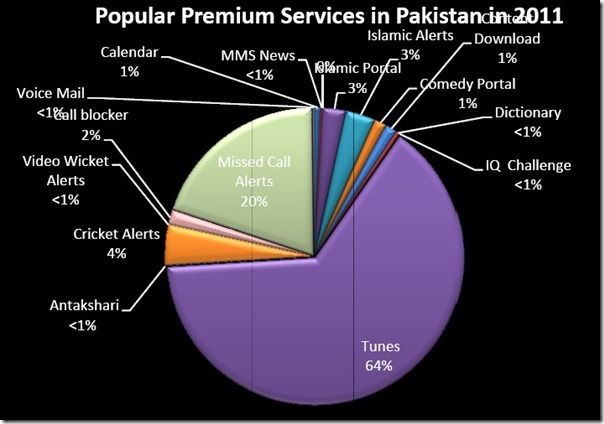
Altogether, 64% of the popular premium rate SMS services used in Pakistan were music tunes, followed by missed call alerts (MCA), which is 20%. It is followed by cricket alerts that are 4%. There is still a great potential for the experts to explore in premium rate SMS services.
Following graph shows the popular A2P and P2A SMS services and their share:

Revenues from SMS, MMS

Popular Premium SMS Services Pakistanis Exchanged 238 Billion SMS in 2011
PTA stated that mobile messaging market generated an amount of Rs. 12.4 Billion (12,345,375,247 being the precise value) in 2011. This revenue includes the revenues collected from P2P SMS, MMS, A2P and P2A revenues.
The P2P SMS were the main contributor in terms of revenues. Around 89.8% of the total revenues were from P2P SMS. Around 2.8% of total revenues were MMS revenues while premium SMS (A2P and P2A) contributed 7.4% into the total revenue.
Revenues from SMS Pakistanis Exchanged 238 Billion SMS in 2011

Friday, March 15, 2013

Samsung Galaxy S IV Gets Unveiled


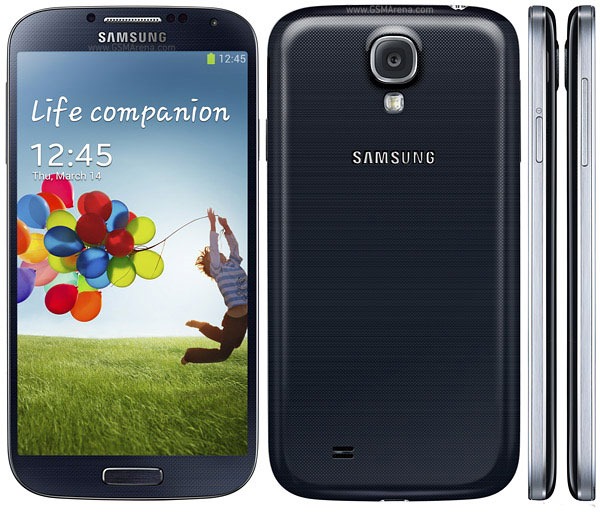
Samsung Galaxy S IV Samsung Galaxy S IV Gets Unveiled
The next big thing from Samsung is finally here as the Samsung Galaxy S IV has been announced in New York this morning. The phone is unarguably one of the very best in the smartphone industry ever with its ground-breaking specs.
Featuring a 4.99 Inch Full HD display, 13mp camera and an 8-core processor, this phone has enough power to thrash any phone in the market right now.
Here are the specs followed by details below:
  • OS: Android OS, v4.2.2 (Jelly Bean)
  • CPU: Quad-core 1.6 GHz Cortex-A15 & quad-core 1.2 GHz Cortex-A7
  • Chipset: Exynos 5 Octa 5410
  • GPU: PowerVR SGX 544MP3
  • Design:
    • Dimensions: 5.38 x 2.75 x 0.31 in
    • Weight: 130 g
  • Display:
    • Type: Super AMOLED capacitive touchscreen, 16M colors
    • Size: 1080 x 1920 pixels, 4.99 inches (~441 ppi pixel density)
    • Protection: Corning Gorilla Glass 3
  • Memory:
    • Card slot: microSD, up to 64 GB
    • Internal: 16/32/64 GB storage, 2 GB RAM
  • Connectivity: GPRS, EDGE, HSDPA: 42.2 Mbps; HSUPA: 5.76 Mbps; LTE, Cat3, 50 Mbps UL, 100 Mbps DL, Wi-Fi 802.11 a/b/g/n/ac, Wi-Fi Direct, Wi-Fi hotspot, Bluetooth, NFC, Infrared port, microUSB v2.0 (MHL), USB On-the-go, USB Host
  • Primary Camera: 13 MP, 4128 x 3096 pixels, autofocus, LED flash
    • Features: Dual Shot, Simultaneous HD video and image recording, geo-tagging, touch focus, face and smile detection, image stabilization, HDR
  • Secondary Camera: 2 MP
  • Battery: Li-Ion 2600 mAh battery

Design

The design of the phone is similar to take of the Note II and the Galaxy S III. Its again made of polycarbonate plastic which some people don’t like a lot but it has its own advantages. It keeps the weight low and adds durability to the phone which isn’t that bad. A thin layer of metal surrounds the phone. It still is hardly a premium material though.
The whole body of the phone weighs just 130g and is razor thin at an astonishing 7.9mm. Height and width dimensions are 136.6 and 69.8 mm respectively.

Display

The display is one of the strongest points of the Galaxy S IV. It sports a 4.99 Inch screen and has a mind-blowing Full HD resolution of 1920 x 1080 pixels. That sums up to 441ppi which is a huge achievement indeed. Its also an AMOLED unit so the colors are extremely vibrant and viewing angles are great. It is protected by Corning Gorilla Glass 3.
Its actually a Pentile Matrix display but that won’t hurt the display much especially of this resolution. But you simply can’t deny that this is the new benchmark of the entire phone industry and all of the phone companies should develop their next flagships by keeping this display in mind.

Operating System

Just like other recent Samsung flagship phones, the Galaxy S IV also runs on the latest piece of software. It runs on Android 4.2.2 Jelly Bean which is the latest Android software to have come out of Google.
Its covered on top with Samsung’s Touchwiz UI which some people don’t like when compared to Vanilla Android but still it several unique and new features to the mix so that’s not necessarily a disadvantage.
Just like the previous year, the Galaxy S IV this year comes with really cool software tricks too. There’s S-Voice which in short is the Siri of Android. Smart Pause stops the video playback when you look away from the screen. Smart Scroll scrolls webpages downwards when you tilt the device and look at it at the same time. There’s S-Health and S-Translator too. Air gestures is another amazing trick which let you do stuff simply by waving in front of the screen. Finally there’s hover-touch which lets you do stuff just by hovering your finger above the display. Video/Audio codec support is pretty rich too.

Hardware

There lives a beast inside every Galaxy S IV. It has got two 4-core processors. The first one is a 1.6Ghz quad-core Cortex A15 processor. The second is a less capable 4-core 1.2Ghz quad-core Cortex A7. No need to get worried though as you won’t be frying eggs on it anyway. The chipset used is Exynos 5 Octa and the GPU is PowerVR SGX 544MP3.
The amount of RAM is set at 2GB. It will be available in 3 storage options: 16, 32 and 64 GB. You can expand that even further by 64 more GBs via a microSD card slot.
In short, the Galaxy S IV has got more power than a lot of PCs on earth. Enough said.

Cameras

Samsung’s obsession with 8mp camera units in flagships has finally come to an end. The Galaxy S IV features a 13mp camera with Full HD video recording, along with a 2.1mp front Full HD camera.
That’s not all though. The camera is full of additional features. There’s HDR mode. There’s a mode which takes video from the front and back camera simultaneously. A Drama Shot mode takes 9 photos and merges them into a single image. One mode even lets you throw an object out of the image you’ve taken.
There’s also a CInema Photo which lets you create GIF images by shooting a video and deciding which part should look moving and which stopped.

Connectivity

The phone shines in the connectivity department too. It features Bluetooth 4.0, NFC, card slot, microUSB 2.0, USB-on-the-go, GPS, dual-band Wifi and Wifi-Hotspot. There’s also IR Blaster which can turn this phone into you most expensive remote control. GPRS and EDGE are there too (for Pakistani telecom companies, just kidding).
It supports micro-sim card slots and connections up to 4G LTE are supported.

Others

A lot of other great features are part of the pack too. First of all, there’s a huge 2600mAh battery which will guarantee long battery life. It will be available in White Frost and Black Mist colors. A lot of social networking services are available. The usual list of sensors including Accelerometer, Gyroscope, Barometer and others are built right into the phone.

Pricing and Availability

The phone will be available in April this year. Pricing details are unknown but considering the fact that the Galaxy S III was the first phone which was more expensive than the iPhone when it first came out, you shouldn’t be placing too many bets on the Galaxy S IV’s lower price tag either.
But whether you like it or hate it, you simply can’t ignore this phone. Featuring great features, a lot of cool tricks, top-of-the-class display and a similarly capable camera, the Galaxy S IV is one of the best smartphones ever.
If you don’t care about the cons, i.e. the big size and the build materials much, I don’t think anything other than the Galaxy S IV can suit you better. All hail the new king of the Android kingdom.

IBM launches Customer Experience Lab for innovation in customer interaction

ibmIBM has launched the IBM Customer Experience Lab which will help businesses change the way their customers experience their products, services and brands through the use of mobile, social, cloud and advanced analytics technologies. This lab will allow CEOs, CFOs, CMOs, heads of sales and other C-level executives direct access to a virtual team of 100 Researchers and business consultants which will help co-create with clients to deliver systems that learn and personalize the experiences of each individual customer, identify patterns, preferences and create context from Big Data, and drive scale economics.
The new age of Big Data and analytics, have made organization re-evaluate their customer strategy from addressing mass audiences to building personalized relationships. These technologies also allow enterprises to engage with their employees in new ways, allows government agencies to develop new relationship with citizens and enables new models of interaction among students and educational institutions.
The IBM Customer Experience Lab provides IBM clients with a process to initiate and further innovation, in addition to assets and platform for business leaders giving them the ability to work with IBM researchers and business consultants for analyzing business challenges and joint creation of solutions that integrate next-generation mobile, social, analytics and cloud technologies.

Thursday, March 14, 2013

Andy Rubin Calls it a Day as Android Chief

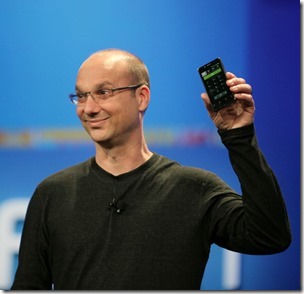
Andy Rubin Andy Rubin Calls it a Day as Android ChiefAndy Rubin, the guy in charge of Google’s Android operating system will finally step down from his post after a long, fruitful period of 8 years. He will be replaced by Sundar Pichai who has already worked on the Chrome browser and Chrome OS among several other things.
Rubin is the person behind the enormous success of the biggest smartphone operating system on the planet and has worked with a number of tech giants including Apple and Carl Zeiss.
The announcement was made by Google CEO Larry Page in the official Google Blog. "Sergey and I first heard about Android back in 2004", Page writes, "when Andy Rubin came to visit us at Google. He believed that aligning standards around an open-source operating system would drive innovation across the mobile industry. Most people thought he was nuts. But his insight immediately struck a chord because at the time it was extremely painful developing services for mobile devices".
He isn’t going out of the picture though. "Having exceeded even the crazy ambitious goals we dreamed of for Android — and with a really strong leadership team in place — Andy’s decided it’s time to hand over the reins and start a new chapter at Google. Andy, more moonshots please!" Page is obviously hinting at a new position for Rubin in the future.
Android was founded by Rubin and his 2 other colleagues in 2003. It encountered a series of financial troubles until Google bought it in 2005, bringing Rubin to Google. Success came quickly without breaking records. Praises starting coming by the end of the last decade as Google started the use of new technologies in their phones and also with the launch of their own ‘Nexus’ phones. As of now, 750 million devices run Android worldwide and 25 billion apps have been downloaded from the Play Store – the Android Market Place – so far.
Moving forward Larry Page is optimistic about the new chief of the Android department. "Going forward, Sundar Pichai will lead Android, in addition to his existing work with Chrome and Apps." Page writes. "Sundar has a talent for creating products that are technically excellent yet easy to use—and he loves a big bet. Take Chrome, for example. In 2008, people asked whether the world really needed another browser. Today Chrome has hundreds of millions of happy users and is growing fast thanks to its speed, simplicity and security. So while Andy’s a really hard act to follow, I know Sundar will do a tremendous job doubling down on Android as we work to push the ecosystem forward."
One thing which has always been a characteristic of Rubin’s work is his innovation and taste. Now that he has left Android, it will be interesting to see which way he will go from now onwards and what wonders will he be able to achieve from there.