Thursday, April 11, 2013

Majority of Pakistanis Are Unhappy About YouTube Ban, They Blame Google For it: Survey

Rozee Research recently did a survey to find out from the educated community of Pakistan as to how, if applicable, YouTube ban has affected them.
Rozee.PK’s survey tried to dig out into which sub-sector, students vs. employed has been affected by the YouTube ban and in what ways. Are people happy with ban? do they perceive it as justified? Who do they blame, (Google, Government etc. ) and why? Has the business been affected (less revenue generation from ads), what alternatives have been in use, and whether this ban has really resulted in something beneficial for the people of Pakistan and of course the economy at large.
More than 3000 people responded to this survey from across Pakistan and here are the results that were exclusively shared with ProPakistani for the readers:

Highlights:

  • 30 percent respondents came to know of ban through digital media channels
  • 88 percent respondents used to access and use YouTube before ban, who don’t use YouTube anymore
  • 68 percent people think that they are unable to watch videos of their choice anymore
  • 30 percent people have shifted to alternate video service
  • Before ban, majority of users used to watch instructional and self-help videos (75%), while half of respondents said that they used to watch Islamic Lectures (52%) while 69% said that they used to watch movie trailers and songs
  • After the ban, 40 percent respondents have unfavourable opinion about Google, before ban this ratio was mere 6 percent
  • 62 percent respondents said that Google is being unreasonable for not removing the anti-Islam videos which irked the ban
  • 48 percent respondents believe that Google is the real culprit for getting YouTube banned
  • 29 percent believed that Government of Pakistan hasn’t lodged a formal request to YouTube
  • 27 percent think that neither Google nor Government of Pakistan is interesting in opening YouTube
  • 46 percent respondents were unhappy about the ban, 43 percent were okay with the ban

Why YouTube is Banned?

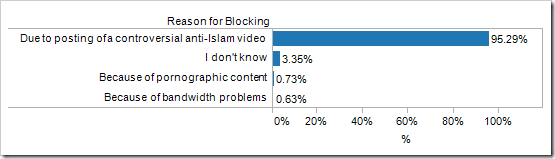
Surprisingly 95% of the respondents who took the survey knew the answer to that one. The rest either didn’t know (3%) or thought it’s because of bandwidth issues (0.6%) or pornographic content on YouTube (0.7%).
clip image002 Majority of Pakistanis Are Unhappy About YouTube Ban, They Blame Google For it: Survey

Power of Media

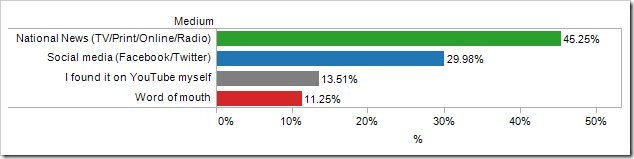
The power of media in making those 95% aware of the video’s presence can be seen in the fact that a whopping 45% of them found about it via National News (TV/Print/Radio/Online). 30% of them found about it via their online social media connections; 14% found it themselves on YouTube; and 11% learnt about it via grapevine.
clip image004 Majority of Pakistanis Are Unhappy About YouTube Ban, They Blame Google For it: Survey

Decline in Viewership

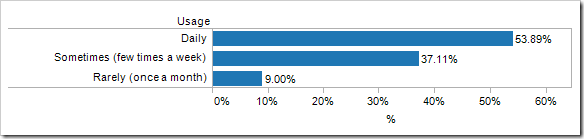
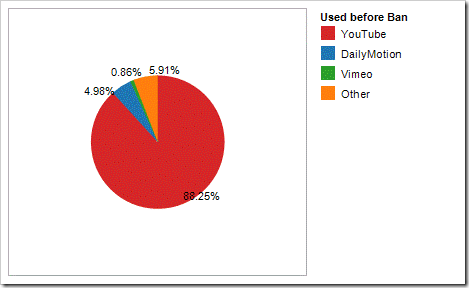
Before the ban on YouTube a whopping 88% of the respondents used it. Of these, 54% used to browse videos on YouTube daily.
clip image007 Majority of Pakistanis Are Unhappy About YouTube Ban, They Blame Google For it: Survey
clip image009 Majority of Pakistanis Are Unhappy About YouTube Ban, They Blame Google For it: Survey
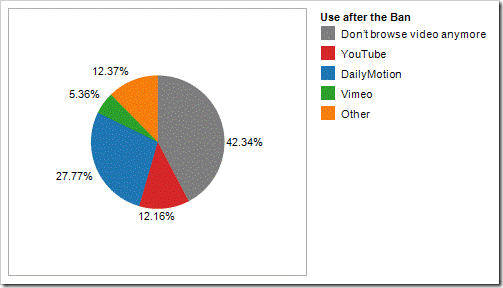
After the ban on YouTube, the viewership has declined to 12% who are still able to access YouTube via a proxy. In addition to this, 42% respondents admitted not browsing videos at all because of the ban on YouTube.
clip image011 Majority of Pakistanis Are Unhappy About YouTube Ban, They Blame Google For it: Survey
15% student respondents admitted still being able to use and access YouTube, comparatively more than the unemployed (13%) and employed respondents (11%).
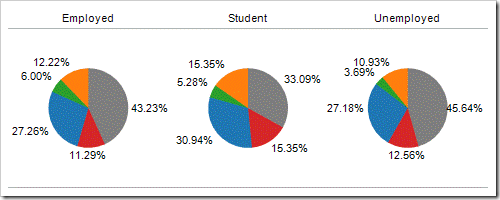
clip image013 Majority of Pakistanis Are Unhappy About YouTube Ban, They Blame Google For it: Survey
Another interesting trend is seen in the fact that the use and access to YouTube diminishes as the respondents’ age increases. Where 16% of the respondents below 20 admit still using YouTube, for those above the age of 45, the rate falls to 8%.
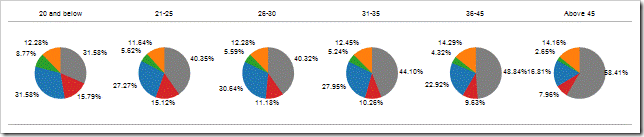
clip image015 Majority of Pakistanis Are Unhappy About YouTube Ban, They Blame Google For it: Survey

In the Aftermath of the Ban

69% of the respondents, who used YouTube before the ban, said because of the ban they have been unable to view videos of their choice. For others it has resulted in monetary losses: for individuals who used to it promote their business (9%), advertisers (6%) and has disrupted their other Google Services causing problems in business operations (14%). However, 30% of the respondents reported they have been able to cover up their losses by switching to alternatives.
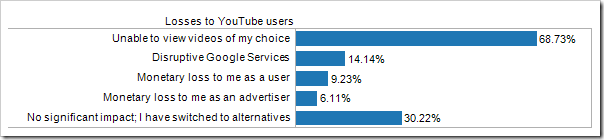
clip image017 Majority of Pakistanis Are Unhappy About YouTube Ban, They Blame Google For it: Survey
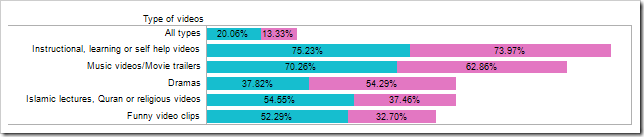
Majority of respondents, who used YouTube primarily before it was banned, said they watched instructional and self-help videos (75%), Islamic Lectures (52%), and movie trailers and songs (69%).
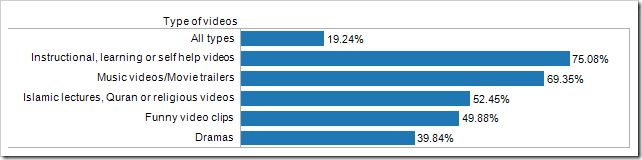
clip image019 Majority of Pakistanis Are Unhappy About YouTube Ban, They Blame Google For it: Survey
The preference for males and females for using YouTube differs slightly with females showing comparatively more preference to watching Dramas than their male counterparts. However, surprising to note where 54% of the men who used YouTube use it for religious purposes, while only 38% females have been using it for this purpose.clip image021 Majority of Pakistanis Are Unhappy About YouTube Ban, They Blame Google For it: Survey
clip image023 Majority of Pakistanis Are Unhappy About YouTube Ban, They Blame Google For it: Survey
Instructional, learning and self help videos tops as a reason for using YouTube for both men and women. One aspiring artist from Lahore voices her distress over the ban, “I’m a poor artist who cannot afford fancy productions and Media releases. All I had to promote my cause and my music is now taken away from me…. And there are many like myself who are trying to spread positivity, peace, love and healing. Also as a corporate trainer, I used a lot of useful videos on YouTube in my work, now I cannot. Other sites don’t offer half as much useful information and insights and instructional videos.”

Disappointed with Google?

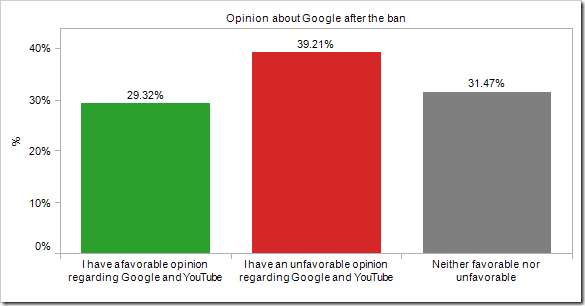
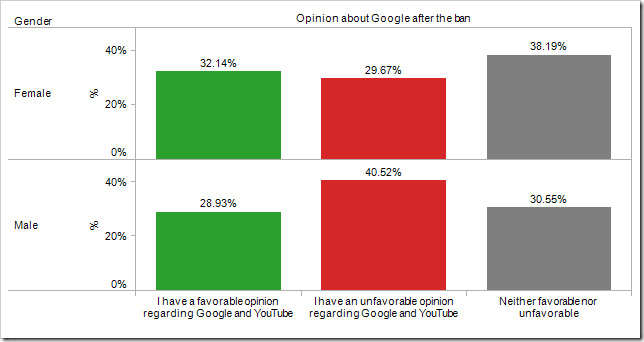
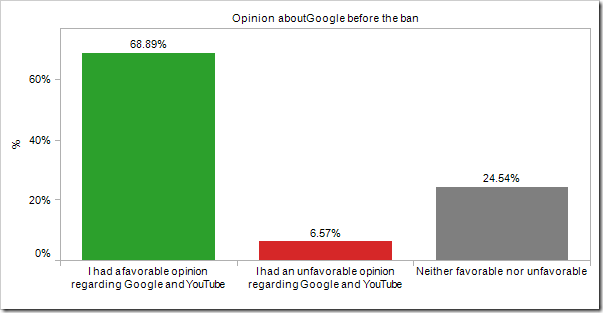
Whereas 69% of respondents had a favorable view of Google before the YouTube blocking, this number dropped to only 29%.  39% now view Google unfavorably and of these 20% held the view that Google was antagonistic towards Muslims.
clip image025 Majority of Pakistanis Are Unhappy About YouTube Ban, They Blame Google For it: Survey
clip image026 thumb Majority of Pakistanis Are Unhappy About YouTube Ban, They Blame Google For it: Surveyclip image028 Majority of Pakistanis Are Unhappy About YouTube Ban, They Blame Google For it: Survey
clip image030 Majority of Pakistanis Are Unhappy About YouTube Ban, They Blame Google For it: Survey
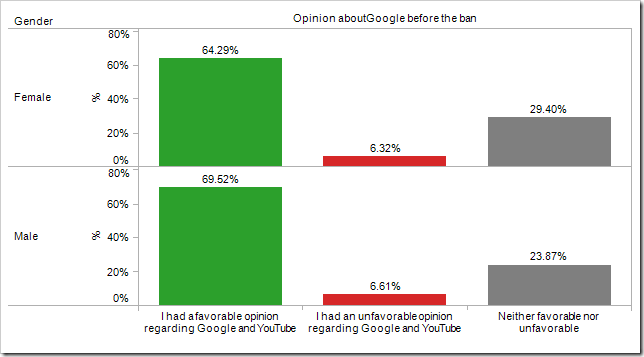
For males, the opinion about YouTube after the ban has drastically switched; with 6.6% considering it unfavorable before the ban, but after the ban a whopping 40% have an unfavorable opinion about Google and their YouTube services.
clip image032 Majority of Pakistanis Are Unhappy About YouTube Ban, They Blame Google For it: Survey
clip image034 Majority of Pakistanis Are Unhappy About YouTube Ban, They Blame Google For it: Survey

How Just Is Google?

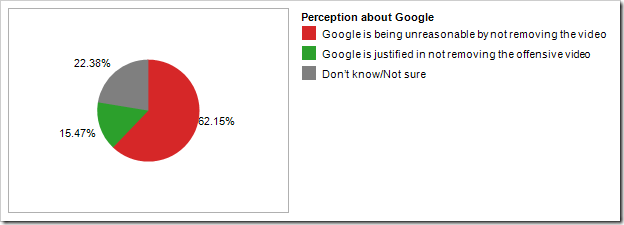
Only 15% feel that Google’s action decision to not remove the video is justified. However a massive 64% of the respondents were of the opinion that Google has been unreasonable with its decision to not remove the video from YouTube.
clip image036 Majority of Pakistanis Are Unhappy About YouTube Ban, They Blame Google For it: Survey
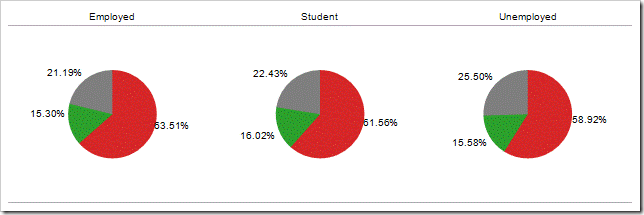
The perception doesn’t falter for employed, student or unemployed respondents as each feel Google is being unreasonable by not removing the video. Employed respondents (63%), however, comparatively feel more hurt by Google’s adamant nature.
clip image038 Majority of Pakistanis Are Unhappy About YouTube Ban, They Blame Google For it: Survey

Google vs. the Government of Pakistan

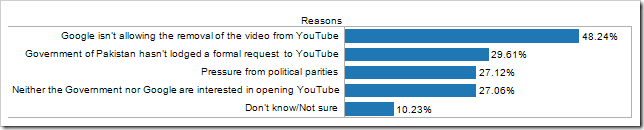
48% Pakistanis feel that Google isn’t allowing the removal of the video from YouTube which is why the decision to unban YouTube in Pakistan is still pending. Others are of the view that it is the Government of Pakistan that hasn’t lodged a formal request to YouTube for the removal of the video. Users of YouTube in the past have exposed prominent members from Pakistan government and political parties in compromising videos and 27% feel that it could be a possible explanation as to why there has been a delay in YouTube being banned from Pakistan. Some of them (27%) also felt that it could be both Google and Government of Pakistan’s lack of interest in the matter which has caused a delay in decision regarding the ban on YouTube.
clip image040 Majority of Pakistanis Are Unhappy About YouTube Ban, They Blame Google For it: Survey

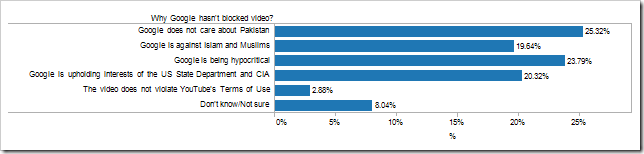
Why Is Google Being Uncompromising?

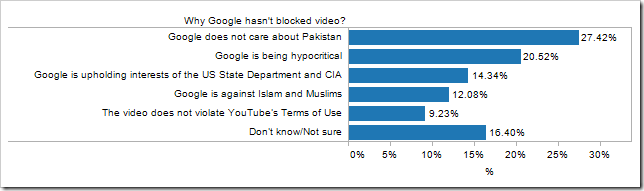
A majority (27%) believe Google does not care about Pakistan to be bothered with the efforts for unblocking. Others (20%) are of the view that Google is being hypocritical because it had blocked the video in India, Saudi Arabia, Indonesia but not Pakistan. Rest of the respondents (12%) feel that reason why Google has not blocked the video is because it is against Islam and Muslims and Google is upholding interests of the US State Department and CIA (14%).
However, a meager 9% feel that the video does not violate YouTube’s Term of Use, and hence makes Google justified in their actions.
clip image042 Majority of Pakistanis Are Unhappy About YouTube Ban, They Blame Google For it: Survey

Ban or Not to Ban: That is the Question

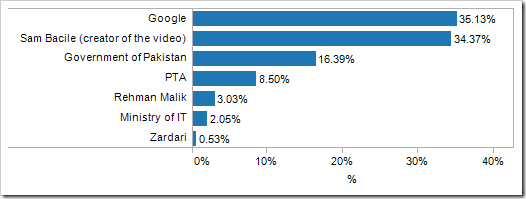
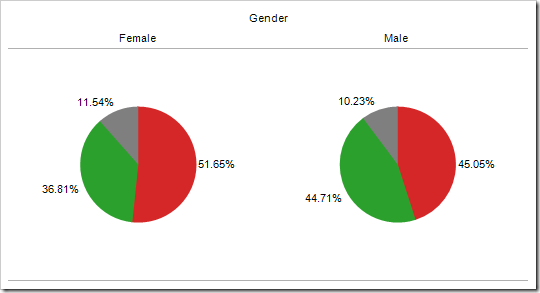
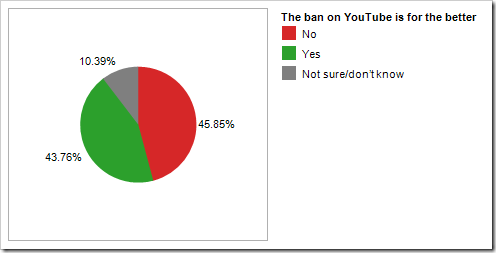
A majority of the respondents (46%) are unhappy with the ban declaring their disappointment at how the ban isn’t for the better. 44%, however, felt that the ban is justified.
Of those who oppose the ban, held Google (35%) and Sam Bacile, the creator of the video (34%) primarily responsible for the ban on YouTube. Others’ view was divided between the Government of Pakistan (16%), Pakistan Telecommunication Authority (8%), and Rahman Malik (3%).
clip image045 Majority of Pakistanis Are Unhappy About YouTube Ban, They Blame Google For it: Survey
clip image047 Majority of Pakistanis Are Unhappy About YouTube Ban, They Blame Google For it: Survey
Female respondents are less welcoming of the ban as their male counterparts with 52% of them opposing the ban. Male respondents feel most torn in their decision to evaluate the ban on YouTube with almost equal number (45%) opposing and appreciating the ban.clip image049 Majority of Pakistanis Are Unhappy About YouTube Ban, They Blame Google For it: Survey
clip image051 Majority of Pakistanis Are Unhappy About YouTube Ban, They Blame Google For it: Survey
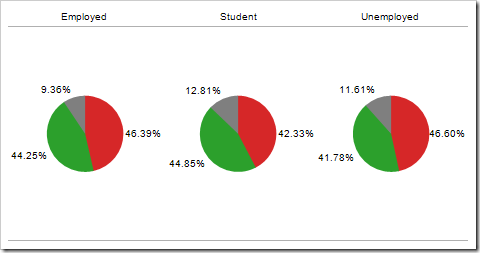
Respondents working status break down shows a similar perception for the three classes: employed (46%), student (42%) and unemployed (47%); with the majority feeling the ban isn’t for the better.
clip image053 Majority of Pakistanis Are Unhappy About YouTube Ban, They Blame Google For it: Survey

Conclusion:

In a nutshell, the ban has been unwelcoming by the Pakistani internet community at large. However, Google and its YouTube services have severely taken the hit with the ban in place with their unyielding decision to not remove the controversial content. Majority feels they have acted in an extremely hypocritical way and their antagonism for Pakistani Muslim community is very much obvious through their resolute on keeping the video on their site in Pakistan only.

Methodology

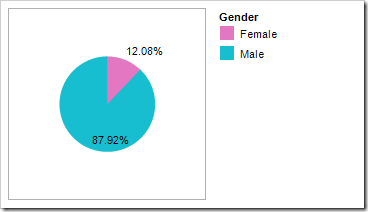
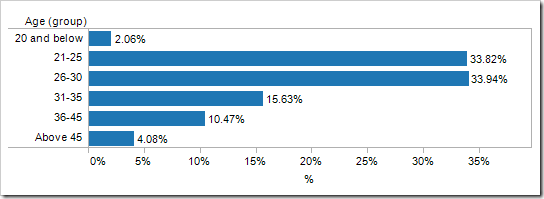
More than 3000 respondents took the online survey from across 165 cities in Pakistan; with majority of respondents being males and belonging to the age group 26-30.
clip image055 Majority of Pakistanis Are Unhappy About YouTube Ban, They Blame Google For it: Survey
clip image057 Majority of Pakistanis Are Unhappy About YouTube Ban, They Blame Google For it: Survey
clip image059 Majority of Pakistanis Are Unhappy About YouTube Ban, They Blame Google For it: Survey
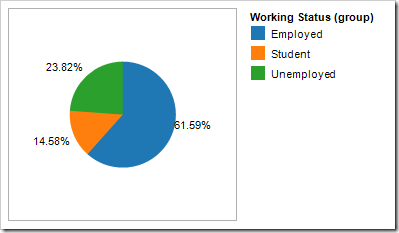
62% of the respondents were employed with 15% student respondents taking part in the survey.
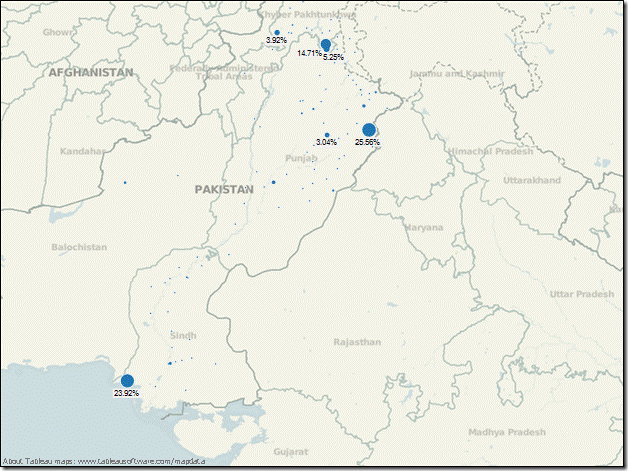
Majority of respondents hailed from Lahore (25.56%), Karachi (23.92%), Islamabad (14.71%), Rawalpindi (5.25%) and Peshawar (3.92%).
clip image061 Majority of Pakistanis Are Unhappy About YouTube Ban, They Blame Google For it: Survey

Wednesday, April 10, 2013

USTR Recommends Pakistan to Withdraw ICH to Comply with WTO Obligations

USTR USTR Recommends Pakistan to Withdraw ICH to Comply with WTO ObligationsUnited States Trade Representative (USTR) has urged government of Pakistan to withdraw International Clearing House to to ensure the functioning of a competitive market for the termination of international voice calls and taking necessary steps to prevent collusive behaviour among international operators.
United States Trade Representative (USTR) is an agency that negotiates directly with governments to create trade agreements, to resolve disputes, and to participate in global trade policy organizations.
USTR mentions that LDI operators in Pakistan in October 2012 – upon direction of MoITT – established “International Clearing House” (ICH) under which thirteen Pakistani carriers assigned Pakistan Telecommunications Company Limited (PTCL) the exclusive right to terminate inbound international calls in Pakistan at the “approved settlement rate” set by the Pakistani Telecommunications Authority (PTA).
As part of the ICH agreement, every carrier, other than PTCL, suspended their interconnection arrangements for incoming international traffic and in turn received a fixed share of the revenues PTCL generates from the termination of incoming international traffic in Pakistan.
The new international termination rate set by the PTA was $0.088 per minute, anincrease of approximately four hundred percent over the competitive market rate of approximately $0.02 per minute that existed prior to the ICH agreement.
Upon a petition filed by Brain Telecom, Lahore High Court suspended ICH anddirected PTA to ensure pre-ICH rates for international incoming calls to Pakistan.
USTR said that multiple international carriers have informed it that PTCL remains the only provider of international termination services in Pakistan and that the increased rate of $0.088 per minute remains in effect, even though it is no longer mandated by the PTA.
Most recently, the Pakistan Supreme Court overturned the Lahore High Court ruling and remanded the matter back to the CCP.
United States Trade Representative, in its review, said that Pakistan’s actions to increase its international termination rates have led to a massive increase in rates for telecommunications into Pakistan, hurting both global telecommunications companies seeking to terminate calls in Pakistan and Pakistanis living abroad trying to call home as well as other non-Pakistani consumers.
The immediate cost to U.S. telecommunication companies (and their subscribers, if cost increases are passed on) will be in the tens of millions of dollars. As Pakistani companies and U.S. companies investing in Pakistan depend on competitively-priced telecommunications to engage in trade, Pakistan’s actions also stand to affect these companies’ competitiveness as well, to the extent that they depend on incoming international calls for their business (e.g. from customers, suppliers and affiliates).
USTR said that Pakistan is a member of the WTO with commitments under the GATS Annex on Telecommunications. Section 5 of the Annex on Telecommunication requires the provision of access to telecommunications networks and services in Pakistan on reasonable terms and conditions. The WTO Dispute Settlement Body has found that “access to and use of public telecommunications transport networks and services on ‘reasonable’ terms includes questions of pricing of that access and use.”
USTR commented that there is substantial evidence that Pakistan carriers participating in the market for terminating international traffic into Pakistan appear to be colluding to avoid competition and to fix the rate for such termination at a level significantly above the prior range of rates that was offered when all such participants were actually competing to provide such services.
These actions raise concerns about Pakistan’s obligation to provide reasonable terms for access and use as required by the GATS Annex on Telecommunications.
USTR said that it looks to Pakistan to ensure the functioning of a competitive market for the termination of international voice calls by rejecting the ICH agreement and taking necessary steps to prevent collusive behaviour among international operators.

Microsoft files complaint again Android in EU

microsoft Microsoft has filed a complaint in the European Union against Google that the company is forcing its users to use its specific applications like YouTube and Google maps. Oracle, Nokia and 14 other firms have also raised the objection and are a part of the filed petition. FairSpeech is of the opinion that Google is abusing its position of dominance in the market. Google has responded with statement that “We continue to work co-operatively with the European Commission.”
Thomas Vinje, Brussels-based counsel for FairSearch said:
“We are asking the commission to move quickly and decisively to protect competition and innovation in this critical market…Failure to act will only embolden Google to repeat its desktop abuses of dominance as consumers increasingly turn to a mobile platform dominated by Google’s Android operating system”
With Android being used in 70 percent of the smartphones in the world, it has made the company quite bold in terms of its ventures. The complaint describes Google’s Android acting in the market as a “Trojan Horse” which is offered free to the device makers in return for which they are required to preload entire suite of Google mobile services and to give them prominent default placement on the phone.

Tuesday, April 9, 2013

Cyber Secure Pakistan 2013: Dealing with Hackers and Threats

clip image0022 Cyber Secure Pakistan 2013: Dealing with Hackers and ThreatsSince last few years we do get regular news about hacking attempts and defacements. Here are few example stories ProPakistani covered lately:
  • Google’s Pakistan site, 284 others hacked by Turkish hacker group Eboz
  • 2000 Pakistani websites Hacked By Indian United Hackers
  • 20 Pakistan websites Hacked and defaced by jaguar for 26/1
  • Top Pakistani Government & other 250 Websites Hacked by Indishell
  • Pakistan’s Punjab Assembly Website Hacked
  • Bangladeshi hackers defaced top Pakistani websites
  • Pakistani websites are experiencing massive hacking attempts by Israeli hackers
And the list goes on and on.
Is seems like a cyber-war is going on and there is an immense need of creating awareness about data and information security at all levels i.e. from government to an individual level to secure our cyber fronts.
It was last year in May that Pakistan Information Security Association (PISA) took an initiative to pull up a Flagship Conference on Cyber Security to spread awareness at all levels involving relevant stakeholders of the industry. You can recap the archives of the conference here.
After an year, when the threats have only increased, there is another conference planned on April 20th, 2013 with a focus on to creating awareness about cyber security amongst the general public and corporate sector about Information Security issues.
CSP 2013 will continue to evolve the tradition of securing industrial and organizational data transactions.
At Cyber Secure Pakistan 2013, additional director general FIA, project director NR3C, Minister of IT and Telecom along with Secretory IT will grace the conference with their presence. Dignitaries from Google, Microsoft, Interpol, Cyber Secure Malaysia, EC-Council USA, Oman CERT and Australian Federal Police along with other organizations will be there to discuss their point of views and experiences.
Besides discussions by experts, the conference incorporates different sessions like training and competition in order to pull out the right talent from industry. For that reason NTFS Forensic Analysis training will be given by the CERT team from Malaysia in collaboration with NIMIS. ‘Capture the Flag’ hacking competition with exciting giveaways for the winners is also set in place in collaboration with Tranchulas.
The conference is pertinent for all professionals working in the field of Information or Data Security.
Cyber Secure Pakistan 2013 is carrying the following objectives:
  • Bridging the gap between local and global Information Security practices;
  • Educating about adapting new streams (tracks) of Information Security for bringing positive change in the IT industry;
  • Improving our infrastructure according to the current immediacy of global threat;
  • Highlight the hidden talent of professionals working in the back end to bring Pakistan back on the global talent map;
  • Bring academia and industry closer to each other for bringing change and solving our collective problems.
You can get yourself registered at:http://www.cybersecurepakistan.com/registration.php
Just to mention, ProPakistani is the official Blog Partner for the conference and we will be brining you all the updates from the conference.

Internet Speeds Get Back to Normal as Repair of Undersea Cable Gets Completed

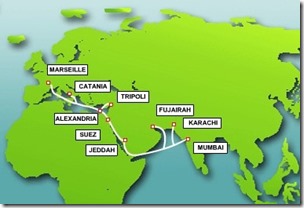
IMEWI Internet Speeds Get Back to Normal as Repair of Undersea Cable Gets CompletedIMEWE  Segment 1  repair  has  been  completed after almost one month and cable has been powered  up  for  the  traffic,  said a statement issued today.
Statement said that post repair system performance has been verified and undersea cable is now functioning in full throttle. Repeaters performance and splice loss all are as per the acceptable values.
Reportedly, the shunt fault was located at  116.7 KM from Mumbai link where the cable was observed to be dragged on sea bed by fishing liners.
It maybe recalled that IMEWE got damaged on March 10th, after which PTCL and other Pakistani ISPs had to route traffic to other under-sea cables connected to the country.
During  the  cable  fault  Pakistani Internet Service Providers took  necessary actions to minimize the impact  on  the  services  to  customers in Pakistan, by making alternate arrangement for internet capacity.
This has been made possible because of multiple submarines cable systems facility in Pakistan.
It merits mentioning here that SMW4 – another undersea cable connected to Pakistan – was also damaged during last month, but was soon repaired.
Currently the internet speeds in Pakistan are fully up and powered in full throttle.